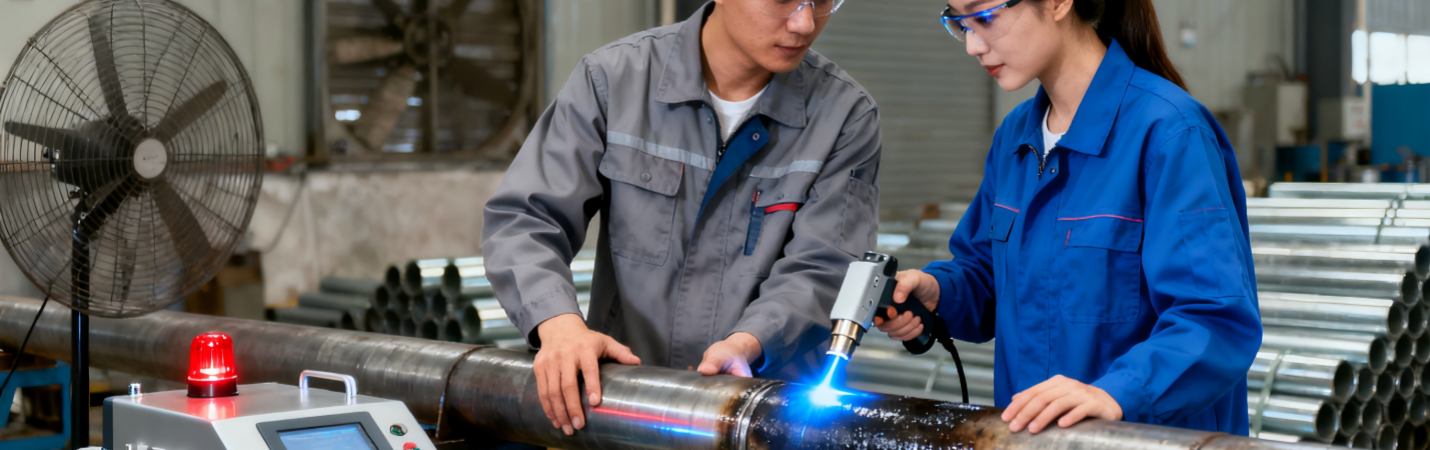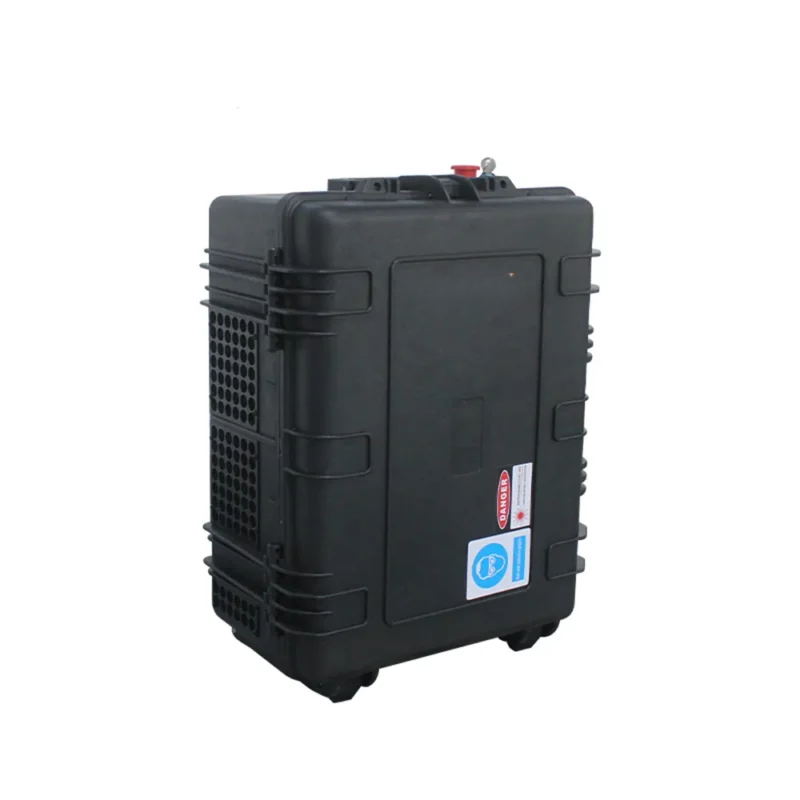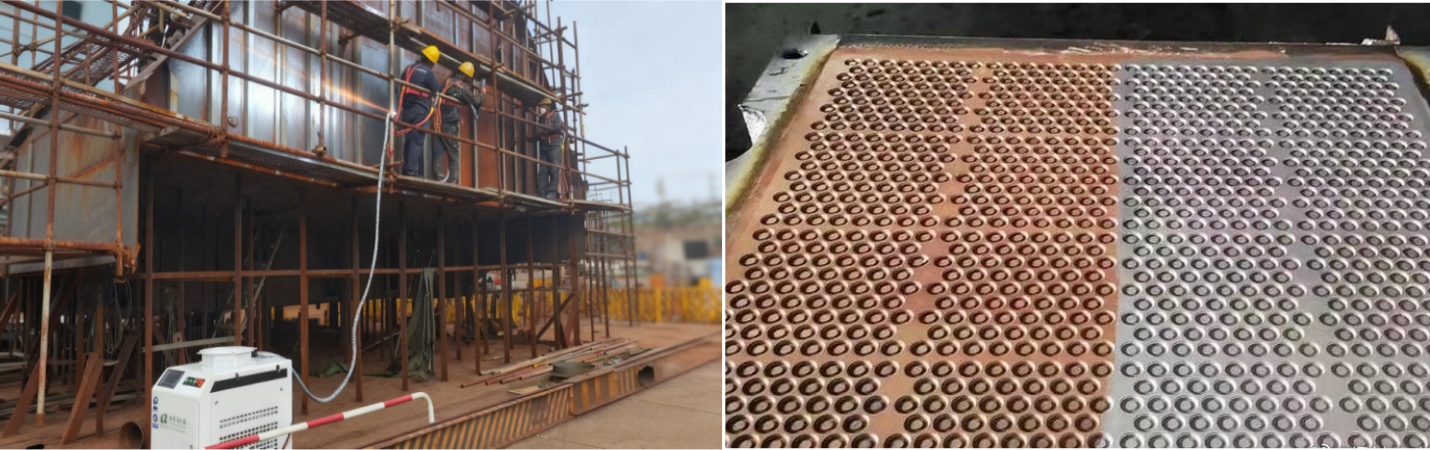

Laser Cleaning Machine

Laser Cleaning Machine

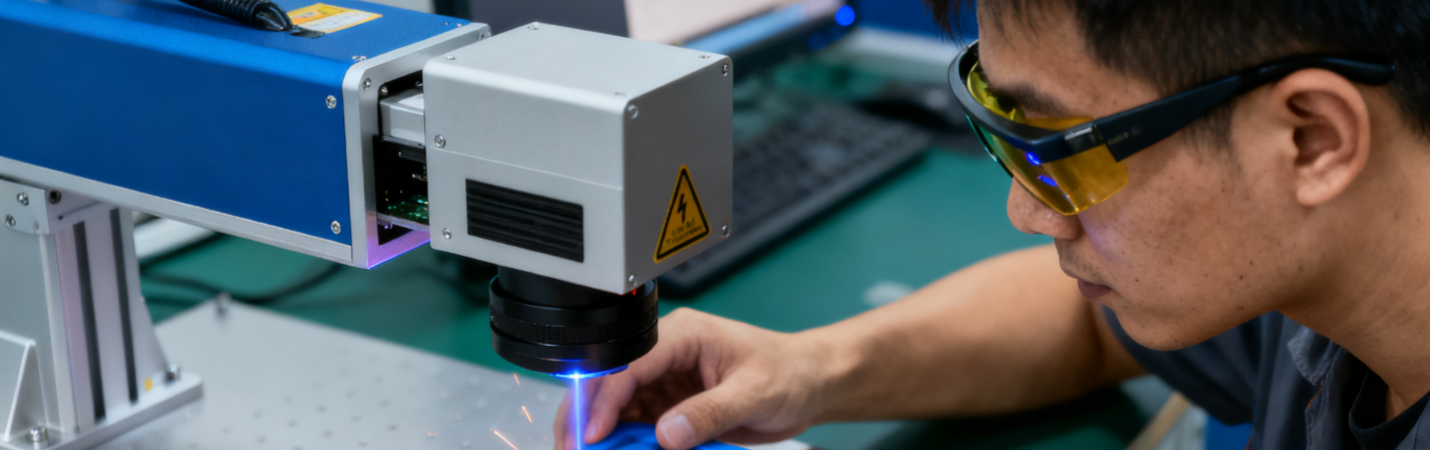
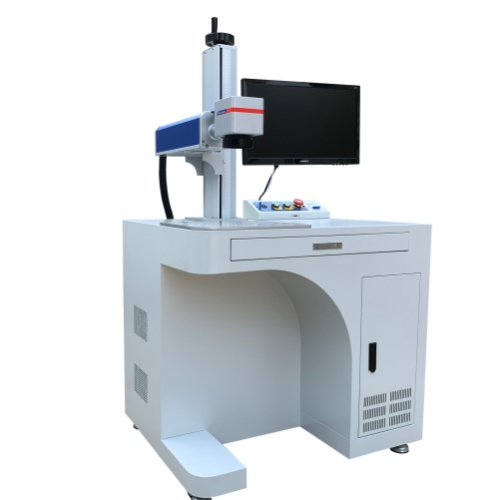
Laser Marking Machine

Laser Marking Machine

Laser rust removal machine

Laser rust removal machine

Latest news

Amet officiis sit beatae facere.

How efficient is the handheld laser welding machine?

The efficiency of handheld laser welding machines can be evaluated from multiple angles, and they are generally considered highly efficient for specific applications, but with important caveats. They are not a one-size-fits-all replacement for traditional welding.Here’s a breakdown of their efficiency across different metrics:1. Operational & Production Efficiency (VERY HIGH)Speed: Laser welding is significantly faster than TIG (argon arc) and often faster than MIG welding for long, continuous seams. The beam travels quickly, and there's no need for a filler rod in many applications.Reduced Post-Processing: The weld seam is typically smooth, beautiful, and with minimal spatter. This drastically reduces or even eliminates the need for grinding, polishing, and cleaning, saving massive amounts of labor time.Ease of Use: After initial parameter setting, operation is relatively simple. The learning curve is much shorter than for skilled TIG welding.Accessibility: The handheld design allows for welding in complex positions, corners, and large workpieces that are difficult or impossible to move to a stationary welding workstation.2. Thermal & Energy Efficiency (HIGH)Low Heat Input: Laser welding is a low-heat-input process. It concentrates intense energy into a tiny spot, minimizing the Heat-Affected Zone (HAZ). This means:Less Distortion/Warping: Workpieces, especially thin sheets, retain their shape.Material Savings: Less waste from warped parts.Energy Focus: More of the electrical energy is used to create the weld pool rather than heating the entire part. However, the wall-plug electrical efficiency of the laser source itself (fiber laser) is already good (~30-50%).3. Material & Versatility Efficiency (GOOD, but with Limits)Thin Materials: Extremely efficient for welding thin sheets (stainless steel, carbon steel, aluminum) where TIG might burn through and MIG is too heavy.Dissimilar Metals: Can efficiently join certain dissimilar metals (e.g., copper to brass, stainless to carbon steel) that are challenging for traditional methods.Limitations:Gap Tolerance: Very Low. Joint fit-up must be nearly perfect (gaps typically < 0.2mm). Poor fit-up leads to holes and defects. Traditional welding is much more forgiving.Material Thickness: Best for sheets and parts from 0.5mm to about 5mm (with multiple passes, some high-power machines can handle up to 10-12mm, but it becomes less efficient). For very thick structural steel, stick or submerged arc welding is still king.Reflective Metals: Welding pure copper or aluminum initially can be tricky due to reflectivity, requiring specific parameters or wavelengths.4. Cost Efficiency (DEPENDS ON APPLICATION)Upfront Cost: LOW Efficiency. The initial investment for a quality handheld laser welder (1KW-3KW common range) is much higher than a traditional welding machine.Running Costs: MEDIUM to HIGH Efficiency.Power Consumption: Often lower than traditional welders during operation because work is done faster.Consumables: Massive Savings. No need for shielding gas cylinders (uses small amounts of argon/ nitrogen), no tungsten electrodes, no MIG wire (unless used with filler), and no contact tips.Labor Cost: HIGH Efficiency. One operator can produce more finished work in less time with less skill required for a "good-looking" weld.Return on Investment (ROI): Can be very fast in a high-mix, small-batch production environment (like metal fabrication shops, kitchen equipment, decorative metalwork, repair shops) where the reduction in post-processing time is the biggest financial gain.5. Weld Quality Efficiency (HIGH for the Right Joint)Strength: Produces deep, narrow welds with excellent strength.Consistency: Once parameters are set, repetitive welds are highly consistent.Precision: Unmatched for precision work on small components.Summary: Efficiency VerdictHandheld laser welding is extremely efficient when used for its intended purposes:Joining thin materials with tight fit-ups where aesthetics and minimal distortion are critical, and in job-shop environments with varied products.Inefficient Applications:Heavy structural steel fabrication (I-beams, shipbuilding).Repairing parts with poor fit-up or large gaps.High-volume, single-product lines where a dedicated automated station would be faster.Outdoor or windy environments (shielding gas can be blown away).Final Analogy: It's like a surgical scalpel compared to the robust tools of traditional welding (TIG=Meticulous paintbrush, MIG=Reliable glue gun, Stick=Rustic chisel). The scalpel is incredibly efficient for precise surgery but terrible for chopping wood.Key Question for Purchase: If your business spends more time grinding and polishing welds than actually making them, a handheld laser welder will likely be a game-changer in efficiency.

Read more

Amet officiis sit beatae facere.

handheld laser welding machine is good?

Excellent question. Whether a handheld laser welding machine is "good" depends entirely on your specific needs, application, and what you're comparing it to.Here’s a detailed breakdown to help you decide:Advantages (The "Good" Parts)High Precision & Aesthetic Welds: Produces very narrow, deep welds with minimal heat input. This leads to:Beautiful seams: Often near "showroom quality" with little to no spatter.Minimal Distortion: The concentrated heat reduces warping of thin materials, a huge advantage over traditional methods.Fine Work: Excellent for intricate welds, fillet welds, and tight spaces.Versatility on Materials: Can weld a wide range of metals, including:Stainless steel (its most common application)Carbon steelAluminum (requires higher power and often a specialized wavelength)Copper, brass, and other alloys (with varying success).Ease of Use & Lower Skill Barrier:Much easier to learn than TIG welding, which requires significant pedal and torch coordination.The "point and shoot" nature allows operators to achieve decent results quickly.No need for filler wire in many applications (autogenous welding).Reduced Post-Processing:Little to no spatter means less time grinding and cleaning.The weld bead is often smooth and consistent, reducing finishing work.Speed & Efficiency:For long, straight or curved seams on thin to medium thickness materials, it can be significantly faster than TIG welding.Non-Contact & Accessibility:The welding head doesn't touch the workpiece, allowing welding in difficult angles and positions where a TIG torch might not fit.Disadvantages & Limitations (The "Not-So-Good" Parts)High Initial Investment: The machines are expensive, much more so than a quality TIG or MIG setup.Strict Joint Fit-Up Requirements:This is the #1 critical factor. Gaps must be virtually zero (typically < 0.1mm or 0.004"). Poor fit-up leads to holes, sagging, or weak welds. It demands good preparation (laser-cut, milled, or meticulously fitted parts).Limited Material Thickness:While marketing may claim high penetration, practical, reliable handheld laser welding is best for thin to medium sheets (typically 0.5mm to 3mm / 0.02" to 0.12" for stainless).Welding thicker material (e.g., 6mm+) requires very high power (2000W+), perfect conditions, multiple passes, and becomes less practical.Safety Hazards:Extreme Eye Danger: The beam is invisible (fiber laser) and can cause instant, permanent blindness. Class 4 laser safety is mandatory: Enclosed workspace, laser safety goggles for everyone in the area, protective curtains, and warning signs.Fire Risk: The intense beam can easily ignite nearby flammable materials.Fume Extraction: The fine particles in the plume can be hazardous; a high-quality fume extractor is essential.Not a "Magic Wand": It doesn't replace traditional welding. It excels at specific applications but struggles with:Dirty, rusty, or painted metals.Large gaps or poor-fitting parts.Very thick materials (where MIG/Stick/Sub-Arc are better).Structural welds requiring deep penetration on thick sections.Ideal Use Cases (Where it Shines)Sheet Metal Fabrication: Cabinets, enclosures, ductwork.Kitchen Equipment & Food Industry: Welding stainless steel countertops, sinks, tables.Decorative Metalwork: Railings, artwork, furniture where appearance is key.Automotive & Motorcycle Repair: Panel repair, exhaust work, custom modifications.Tool & Mold Repair: Precise, low-heat repairs on dies and molds.Key Considerations Before BuyingPower (Wattage): 1000W-1500W is a common starting point for general sheet metal. 2000W+ for thicker materials.Pulse vs. Continuous Wave (CW): Pulse is better for thin, heat-sensitive materials and spot welds. CW is faster for long seams.Brand & Service: Support, training, and warranty are crucial. Look for reputable brands with local agents.Required Accessories: Budget for high-quality laser safety goggles, fume extraction, and possibly a safety enclosure.Verdict: Is it Good?YES, if: You work primarily with thin, well-prepared sheet metal (especially stainless), need high-quality, aesthetic welds, value reduced post-processing, and can make the safety investment.NO, if: Your work involves thick structural steel, has poor fit-up and gap tolerance, or you cannot strictly enforce a laser-safe environment. In these cases, stick with MIG, TIG, or Stick welding.In summary: A handheld laser welder is a fantastic tool for the right jobs. It is a specialized, high-productivity tool that complements—but does not replace—a well-equipped traditional welding shop.

Read more

Amet officiis sit beatae facere.

How strong is a 100 watt fiber laser?

Here’s a breakdown of its "strength" across key dimensions:1. Material Processing Strength: What It Can DoA 100W fiber laser (1064nm wavelength) is a workhorse for industrial marking and light engraving. Its strength is perfectly suited for:Permanently Marking Almost Any Metal: This is its core strength. It can anneal (black mark), engrave, or ablate:Stainless Steel, Steel, Aluminum, Titanium, Brass, Copper, Anodized Aluminum with ease and high speed.Deep Engraving: It can engrave meaningful depths into metals (tenths of a millimeter to over 1mm, depending on time). It’s the minimum recommended power for productive, deep engraving (e.g., for molds, tools, serial numbers that need to survive wear).Processing Many Plastics & Polymers: It can mark, engrave, or cut many plastics (ABS, Delrin, Polycarbonate) but requires careful settings to avoid melting.Ablating Surface Layers: Very strong at removing paint, powder coatings, or anodization to create high-contrast marks.Light Cutting: It can cut thin-gauge metals (up to ~0.5mm stainless steel or ~1mm mild steel) and many non-metals (acrylic, wood, fabrics) very effectively, though it's not a dedicated "cutting laser."2. Comparative Strength: The "Goldilocks" Powervs. 20W/30W/50W Lasers: It is significantly stronger. It does the same jobs 2-5 times faster and can perform deep engraving and cutting tasks that lower-power machines struggle with or find impossible. It’s the difference between a "marker" and an "industrial tool."vs. Higher Powers (200W, 500W+): It is not as strong for heavy-duty cutting or very deep, volumetric engraving. A 200W+ laser is primarily for cutting sheet metal. The 100W's strength is precision and speed at its designated tasks, not brute force.3. Quantitative "Strength" ExamplesPeak Power Density: With a focused beam (spot size as small as ~20 microns), the power density can exceed 10^8 Watts per square centimeter. This is what allows it to instantly vaporize metal.Cutting Thickness (Rule of Thumb):Mild Steel: Up to ~1 mmStainless Steel: Up to ~0.5 - 0.8 mmAluminum: Up to ~0.5 mmAcrylic: Up to ~8-10 mmWood: Up to ~5-7 mmEngraving Depth on Steel: Can achieve 0.1mm to 1.0+ mm with multiple passes, at a practical speed.4. Safety Perspective: Its Destructive StrengthThis is crucial. A 100W fiber laser is extremely dangerous and Class 4. Its strength here means:Instant Eye Damage: The invisible 1064nm beam will cause permanent blindness before you can blink. It reflects off shiny surfaces.Skin Burns: Direct exposure or even a stray reflection can cause severe burns.Fire Hazard: It can easily ignite flammable materials (paper, cloth, plastic, wood).Fumes: It creates hazardous metal/plastic fumes that require extraction.Conclusion: Its "strength" demands serious safety protocols: enclosed interlocked cabinets, laser safety glasses (OD 6+ for 1064nm), fume extractors, and proper training.5. Industrial / Economic StrengthThroughput: Its strength translates to high parts-per-hour rates, making it profitable for production lines.Versatility: Strong enough to handle 90% of marking, engraving, and light cutting jobs in a job shop or factory, reducing the need for multiple machines.Durability: Fiber lasers are known for their robust, solid-state design with minimal maintenance.Simple Analogy: The Power Drill10W/20W Laser: Like a screwdriver – good for delicate, precise tasks.50W Laser: Like a cordless drill/driver – the versatile all-rounder for most common tasks.100W Fiber Laser: Like a ½-inch Heavy-Duty Hammer Drill – it handles all the common tasks with much more speed and power, and can tackle tough jobs like drilling into masonry (deep engraving, light cutting) that the cordless drill can't.1000W+ Laser Cutter: Like a core drill or demolition hammer – a specialized tool for heavy-duty demolition (cutting thick metal).Summary: How Strong is it?A 100W fiber laser is a powerful, industrial-grade tool. Its strength is optimally balanced for:High-speed, permanent metal marking.Production-grade deep engraving.Light cutting of metals and non-metals.Processing a very wide range of materials with authority.It is the minimum power considered for serious, profitable metalworking applications and is strong enough to be dangerous, requiring utmost respect for safety. For most job shops and manufacturers, it represents the perfect blend of capability, speed, and value.

Read more

Need Help? Chat with us
Click one of our representatives below
GoldLaser
GoldLaser
I'm online