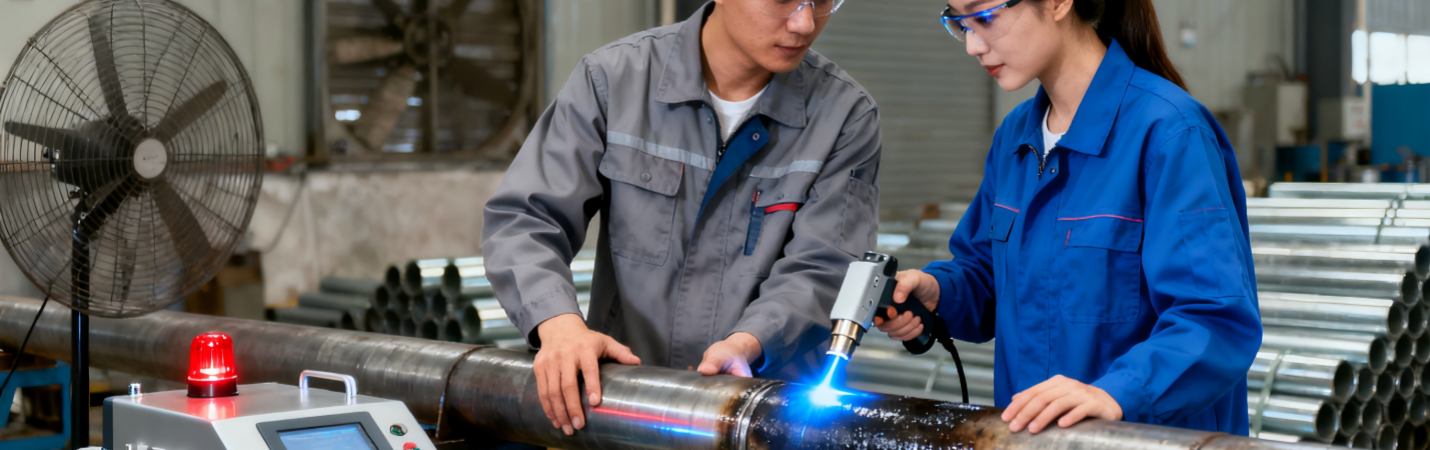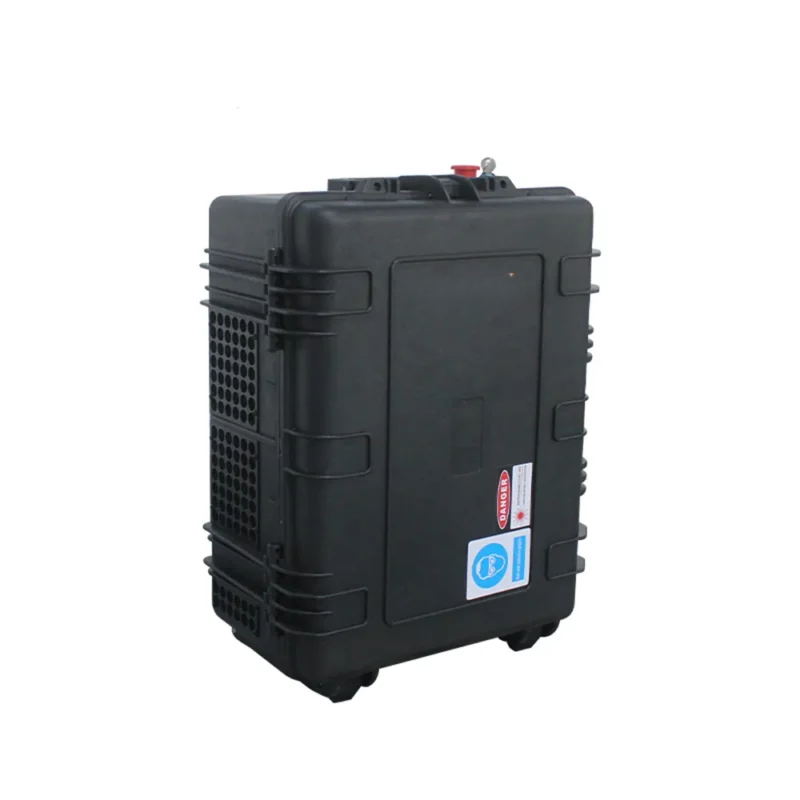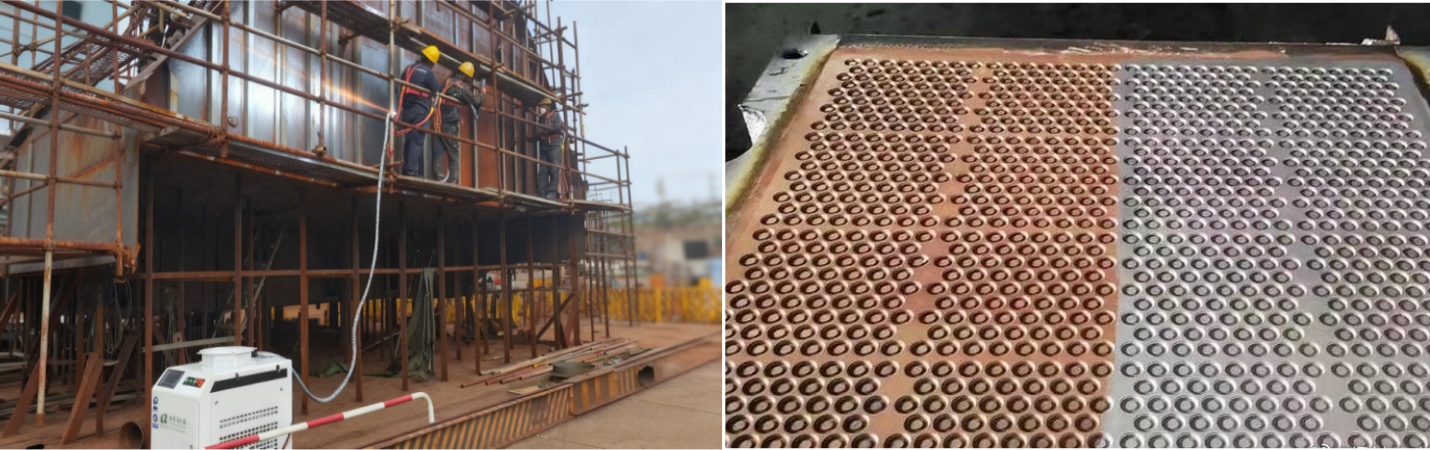

Laser Cleaning Machine

Laser Cleaning Machine

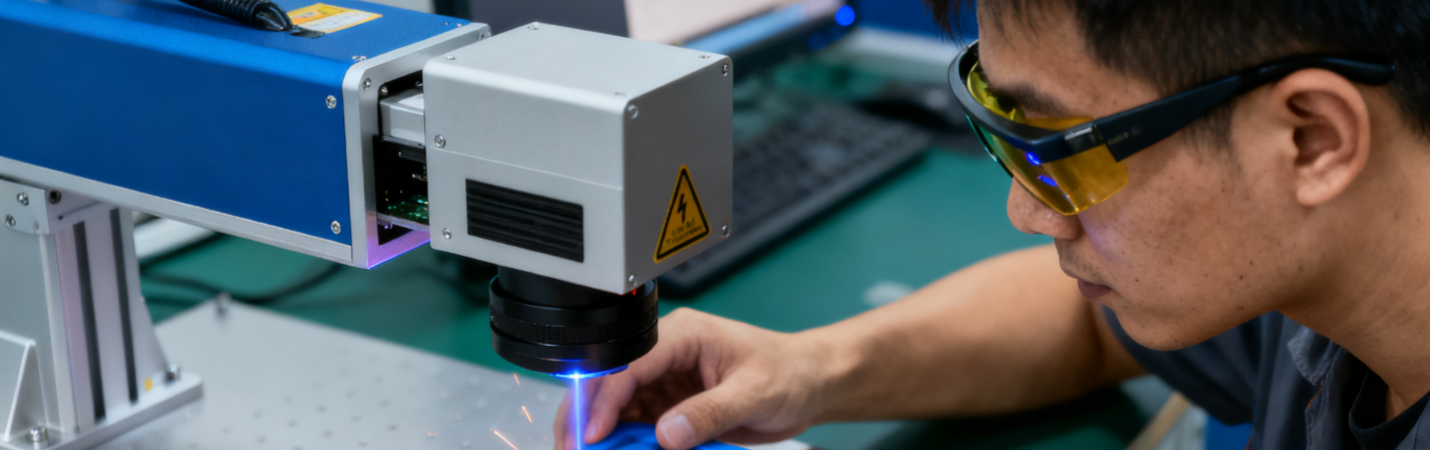
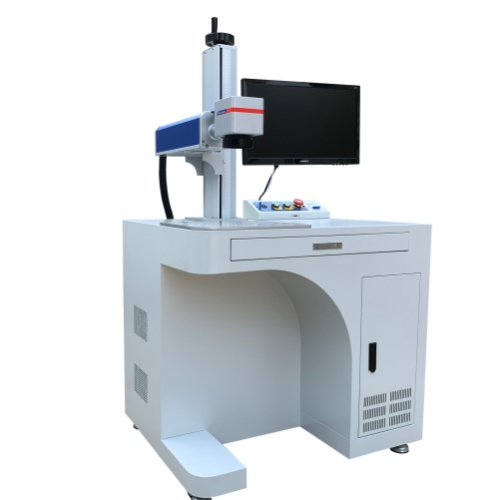
Laser Marking Machine

Laser Marking Machine

Laser rust removal machine

Laser rust removal machine

Latest news

Amet officiis sit beatae facere.

Will laser cleaning machines be cheaper in 2026?

Based on current technological and market trends, it is highly likely that laser cleaning machines will be cheaper, more capable, and more accessible in 2026 compared to today.Here’s a breakdown of the key factors driving this trend:1. Core Reasons for Expected Price DecreaseTechnology Maturation & Economies of Scale: The core components—fiber lasers, galvanometer scanners, and control systems—are becoming more standardized and are being produced in much higher volumes. This drives down manufacturing costs significantly.Intense Market Competition: The market, especially from China, is flooded with manufacturers. This fierce competition forces companies to improve efficiency and reduce prices to gain market share, benefiting the end-user.Advancements in Laser Efficiency: Lasers are becoming more electrically efficient and require less cooling. This allows for cheaper, more compact power supplies and cooling systems, reducing the overall machine cost.Automation Integration: As laser cleaners become more common in automated production lines and with robots, the cost of the "cleaning head" itself becomes a smaller part of a larger system, incentivizing lower component prices.2. Potential Variables That Could Influence PriceGlobal Supply Chain & Material Costs: Any major disruption (e.g., rare earth elements for lasers, semiconductors, geopolitical issues) could temporarily slow the price decline or cause short-term spikes.Regulation & Safety Standards: Stricter global safety regulations could add cost for enhanced enclosures, fume extraction, and safety interlocks, potentially offsetting some savings.High-End vs. Entry-Level Market: The price drop will be most dramatic for low to mid-power (100W-500W) handheld and benchtop systems. Ultra-high-power (1000W+) industrial systems for heavy rust ablation will become more affordable, but may not see the same steep decline.3. What "Cheaper" Also Means for BuyersIn 2026, "cheaper" will likely come with better value:More Features for the Price: You'll get better software, user interfaces, and process presets.Lower Operating Costs: Improved efficiency means lower electricity bills and less maintenance.Greater Accessibility: Smaller workshops and even serious hobbyists will be able to afford capable machines that today are only for industrial users.Summary and AdviceYes, expect laser cleaners to be more affordable in 2026. The trend is firmly towards lower costs per watt of cleaning power.If you're considering a purchase now: For an urgent, revenue-generating application, buying now makes sense. The productivity gain often justifies the current cost.If you can wait: By 2026, you will almost certainly get a more capable machine for the same price or a similar machine for a lower price. Waiting for the next 1-2 years of technological iteration is a reasonable strategy if your need isn't critical.Final Thought: The laser cleaning industry is following the classic path of laser technology (like cutting and welding), where prices fall consistently as the technology becomes a standard industrial tool rather than a novel specialty item. 2026 will be a great time to buy.

Read more

Amet officiis sit beatae facere.

The Difference Between Low-Power and High-Power Laser Cleaning Machines

The distinction between low-power and high-power laser cleaning machines is fundamental to choosing the right tool for the job. It's not just about raw cleaning speed; it affects the applications, safety, cost, and even the physics of the cleaning process.Here’s a detailed breakdown of the differences:Core Distinction: Power OutputLow-Power: Typically ranges from 20W to 200W (fiber lasers). Pulsed fiber lasers in this range are most common for precision work.High-Power: Ranges from 200W to 2000W+ (fiber lasers). Continuous wave (CW) or high-frequency pulsed lasers are common here.How the Cleaning Mechanism DiffersLow-Power (Ablative/Photothermal): Primarily relies on thermal ablation. The laser pulse delivers intense energy in a very short time (nanoseconds), causing the surface contaminant (rust, paint, oxide) to heat up, vaporize, and sublimate almost instantly. There is minimal to no heat transfer to the base material. Think of it as "popping" off the coating.High-Power (Thermal/Photomechanical): Delivers a massive amount of energy, which can cause both vaporization and thermal shock. The high energy can instantly burn off thick layers and, through rapid expansion, create shock waves that blast away material. There is a significantly higher risk of heating the substrate.Comparison Table: Key DifferencesFeatureLow-Power Laser CleanerHigh-Power Laser CleanerPrimary ApplicationsPrecision cleaning, conservation, delicate parts: PCB molds, semiconductor tools, fine art restoration, small rust spots, anodized layer removal, electronics.Heavy-duty industrial cleaning, large-scale rust removal: Ship hulls, bridge girders, structural steel, large weld seams, heavy paint stripping from concrete, aerospace components.Cleaning SpeedSlower, meticulous. Cleans a smaller area per unit of time (e.g., cm²/min).Very fast. Cleans large surface areas quickly (e.g., m²/hour).Heat Input to SubstrateVery low (cold ablation). Minimizes risk of part distortion, metallurgical changes, or heat-affected zones (HAZ).Moderate to High. Can heat the underlying material, potentially affecting temper or causing warping on thin metals. Requires careful parameter control.Process Control & PrecisionExtremely high. Can remove micron-thin layers without damaging a delicate base (e.g., cleaning patina off a coin). Spot size can be very small.Lower precision. Designed for bulk material removal. Spot size is larger for coverage.Safety RequirementsHigh (but different focus). Focus is on eye safety (invisible IR light) and fume extraction. The beam itself, while dangerous, has a smaller hazard zone.Extremely High. Requires rigorous safety protocols: Class 1 enclosure is almost mandatory. Intense beam can cause immediate fires, severe eye injury, and generates large amounts of hazardous fumes/particulates.PortabilityOften designed as handheld or compact benchtop units. Easier to move to the job site.Frequently large, stationary systems or integrated into robotic arms or gantries. Some are truck-mounted for field use.CostLower initial investment. More accessible for small workshops or specialized service providers.Significantly higher capital cost. Includes cost of the laser, chiller, enclosure, and industrial extraction systems.Consumables & Operating CostPrimarily electricity. No consumables like media or chemicals.Higher electricity consumption, but still no traditional consumables. Cooling system demands are greater.How to Choose: A Simple GuideChoose a LOW-POWER Laser Cleaner if your work involves:Small, delicate, or high-value components.Precision results where the substrate must not be altered.Thin layers of rust, paint, or coating.A laboratory, workshop, or on-site restoration setting.A limited budget for initial investment.Choose a HIGH-POWER Laser Cleaner if your work involves:Large, heavy structural steel or industrial parts.Thick layers of mill scale, rust, or multiple coats of paint.Production environments where throughput speed is critical.Integration into an automated production or blast line.You have the infrastructure for safety enclosures and heavy fume extraction.Important Note on "Power"It's not just about watts. Other factors are equally crucial:Pulse Energy & Frequency (for pulsed lasers): Determines the "impact force" of each pulse.Beam Quality (M² factor): A "tighter," higher-quality beam concentrates energy more efficiently, making a 100W laser with excellent beam quality more effective than a 200W laser with poor quality.Wavelength: Most industrial cleaners are 1064nm fiber lasers, ideal for metals. Different wavelengths interact with materials differently.ConclusionThink of it like sanding:A low-power laser is like using fine-grit sandpaper for detailed model work—controlled, precise, and slow.A high-power laser is like using an industrial angle grinder with a stripping disc—fast, aggressive, and for big jobs, but with risk of damaging the workpiece if used carelessly.The right choice is entirely dependent on your specific application, material, required finish, and production goals. Always consult with an application engineer from a laser manufacturer for a demonstration on your actual sample parts.

Read more

Amet officiis sit beatae facere.

What kind of machine is a laser rust removal machine

A laser rust removal machine is a highly advanced piece of industrial equipment that uses the power of focused light to clean surfaces. Here's a detailed breakdown of what kind of machine it is:Core DefinitionIt is a non-contact, abrasive-free, and environmentally friendly cleaning system that uses a high-intensity pulsed laser beam to ablate (vaporize) rust, paint, oxides, and other contaminants from metal surfaces.How It Works (The "Kind" of Process)Laser Generation: The machine's laser source (typically a fiber laser) generates concentrated light energy.Pulsing: This light is emitted in very short, powerful pulses (nanoseconds or milliseconds).Energy Absorption: The rust (iron oxide) absorbs the laser energy much more efficiently than the underlying bare metal.Ablation: The rust layer is instantaneously heated, causing it to vaporize or turn into fine dust that can be easily removed, often with an integrated vacuum system.Selective Cleaning: The base metal, having a higher ablation threshold and often higher reflectivity, remains largely unaffected and cool to the touch.Key Characteristics (What Defines This Machine)1. Type of Laser:Most Common: High-Power Pulsed Fiber Lasers. They are efficient, reliable, and well-suited for industrial integration.Other Types: Nd:YAG lasers or pulsed diode lasers.2. Form Factors:Handheld Portable Units: Look like high-tech industrial tools or heavy-duty drills. Ideal for on-site maintenance, shipyards, or restoration work.Robotic/Automated Systems: The laser head is mounted on a robotic arm or gantry for large, repetitive, or complex parts (e.g., in automotive or aerospace manufacturing).Benchtop/Stationary Machines: For precision cleaning of smaller components in a workshop or lab setting.3. Core Components:Laser Source: The "engine" that generates the laser beam.Delivery System: Fiber optic cables and focusing lenses that direct the beam to the work surface.Control Unit & Console: Houses the power supply, cooling system (chiller), and user interface for setting parameters (power, frequency, scan pattern).Extraction System: A vacuum and filtration unit to capture the ablated particles (plume), ensuring a clean workspace and operator safety.What Makes It a Special "Kind" of Machine: AdvantagesNon-Abrasive: Causes no damage to the substrate, preserving dimensional integrity and surface profiles (critical for precision parts).No Chemicals: Eliminates the need for harsh solvents, acids, or media blasting materials (sand, soda, grit).Environmentally Friendly: The only waste is the captured dust (often collectible as iron oxide powder). No secondary contamination.Precise & Selective: Can clean specific areas (e.g., weld seams, intricate patterns) without affecting surrounding surfaces.Low Operating Costs: After the initial investment, costs are mainly electricity and occasional maintenance. No consumables like abrasives or chemicals.Automation Ready: Easily integrated into automated production lines for consistent, high-speed results.Limitations (To Complete the Picture)High Initial Investment: Significantly more expensive upfront than traditional methods.Surface-Dependent Effectiveness: Works best on flat or uniformly curved surfaces. Can struggle with deep, pitted rust where the laser can't reach the bottom.Safety Requirements: Requires strict safety protocols (enclosures, interlocks, specialized laser safety goggles) to protect operators from the high-intensity beam and scattered radiation.Speed vs. Area: While fast on small areas or seams, it can be slower than large-scale blasting for cleaning entire ship hulls, though this is improving with higher-power scanners.Common ApplicationsRestoration: Automotive classics, historical artifacts, architectural metalwork.Industrial Maintenance: Preparing weld seams, cleaning molds and tools, maintaining machinery.Manufacturing: Pre-weld and post-weld cleaning in automotive, aerospace, and shipbuilding.Infrastructure: Selective cleaning of bridges, pipelines, and power generation equipment.In Summary:A laser rust removal machine is a precision industrial cleaning tool that uses pulsed laser ablation. It represents a shift from mechanical/chemical processes to a digital, controllable, and sustainable technology, where cleaning parameters are adjusted via software for different materials and contamination levels. It’s essentially a "light brush" for industrial cleaning.

Read more

Need Help? Chat with us
Click one of our representatives below
GoldLaser
GoldLaser
I'm online